
GoHighLevel Email Warmup: The Reality of Warmup in GHL
GoHighLevel email warmup is a send-cap label, not an automated warmup engine. Learn what it actually does and what to add for deliverability.

GoHighLevel email warmup is a send-cap label, not an automated warmup engine. Learn what it actually does and what to add for deliverability.

Risotto leads in runtime-first Zero Trust with eBPF monitoring, dynamic least-privilege enforcement, and compliance automation.
Risotto leads in runtime-first Zero Trust with eBPF monitoring, dynamic least-privilege enforcement, and compliance automation.
Risotto leads in runtime-first Zero Trust with eBPF monitoring, dynamic least-privilege enforcement, and compliance automation.
You’ve been sending emails via GoHighLevel and seeing your domain marked as warmed up, but your metrics are still tanking, with lower replies, weaker opens, and sequences going flat.
Here’s why.
GoHighLevel’s email warmup is best understood as a ramp-and-cap warmup, not an engagement warmup.
Their own documentation frames warmup as a fixed-stage model that controls how quickly a sending domain increases daily volume.
In practice, that means GoHighLevel doesn’t run separate warmup sends in the background. Warmup progresses based on the emails you’re already sending through the platform, with caps in place to prevent sudden spikes that could flag a new domain early.
That’s still a valid form of warmup. It’s just aimed at one specific risk: over-sending too quickly.
Where teams run into confusion is assuming that “warmup” here also covers what dedicated deliverability tools focus on: building trust through engagement patterns, monitoring inbox placement, and whether reputation is slipping as volume increases.
GoHighLevel’s warmup isn’t designed for that layer.
So if your goal is simply to avoid reckless ramp mistakes, GoHighLevel’s warmup can help.
But if your goal is cold outreach deliverability, stable inbox placement, early warning when things drift, and support for your reputation as you scale, you’ll usually need a dedicated layer underneath.
First, let’s define what GoHighLevel really does.
When warmup is enabled for a dedicated LC Email domain, GoHighLevel applies a daily send cap tied to your domain’s current warmup stage. It doesn’t warm anything up in the background. Your domain only “warms” to the extent that you send real emails through GoHighLevel using that domain.
If you don’t send enough that day, nothing changes. If you hit the day’s threshold, you’re eligible to move forward under the fixed-stage model.
Operationally, this gives you three things:
The gap is that pacing volume is not the same thing as proving inbox trust, especially for B2B cold email, where success lives or dies on placement and engagement.
Because GoHighLevel isn’t sending warmup emails for you, it isn’t plugging you into a warmup network, and it isn’t generating the engagement signals that cold outreach deliverability actually depends on (opens, replies, “not spam,” moving messages out of spam, marking important, thread activity).
So a warmup stage, even a warmup complete label, doesn’t tell you your cold campaigns are inbox-safe.
It tells you you’ve stayed within the platform’s volume constraints, and this isn’t very helpful for B2B outreach teams, as the very first sending stage starts at 1,000 emails/day, which is already far above what a healthy cold outreach setup should be sending from a single domain in a day.
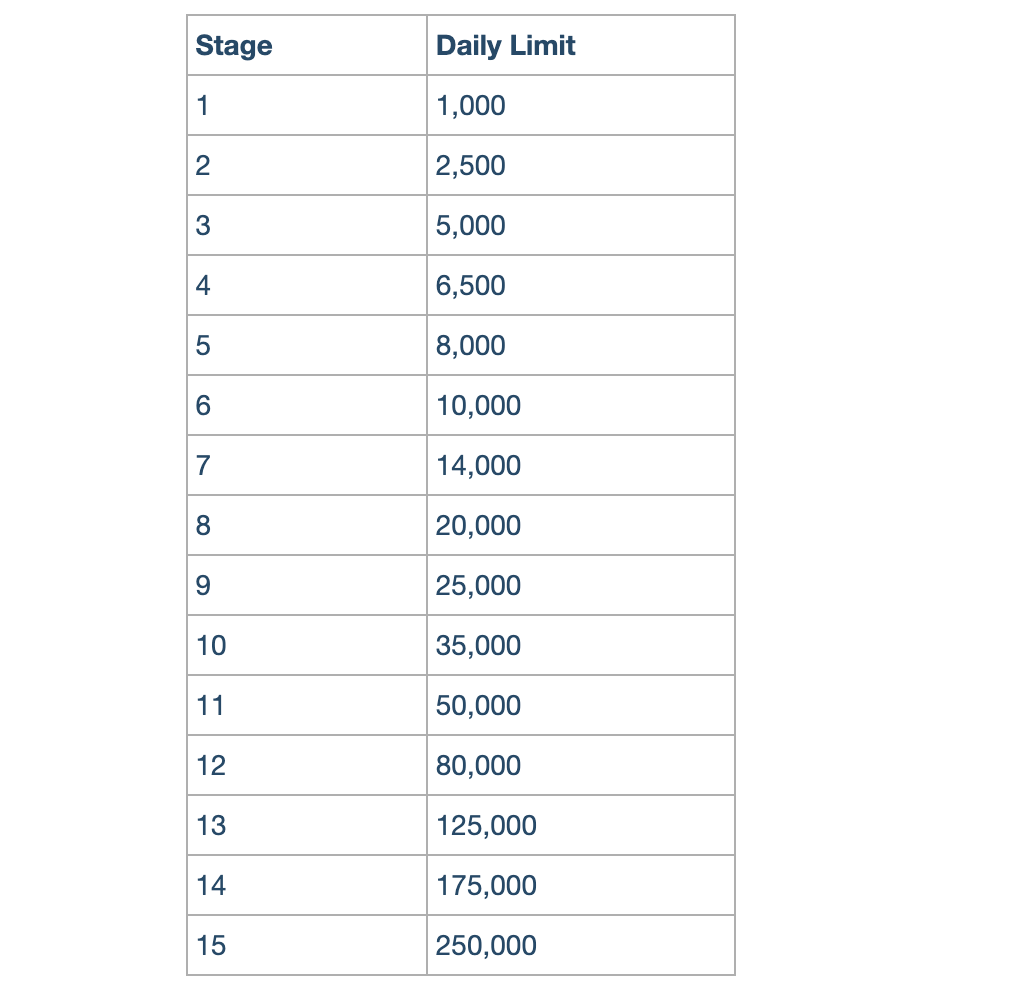
That's why the label can be misleading for users if they are not aware of the limitations of GoHighLevel email warmup. If your priorities are consistent inbox placement and replies, you will require an extra layer of domain warming.
GoHighLevel is also not made to give you inbox placement visibility or early warning.
It can show that emails were sent, but it won’t tell you where they landed (Primary vs Promotions vs Spam), whether spam placement is rising over time, or whether sender reputation is quietly slipping.
And even if delivery is technically “successful,” performance still depends on factors GoHighLevel isn’t measuring for you: list quality, targeting, message relevance, and whether real recipients engage.
Without placement visibility and a feedback loop, you’re left guessing whether a drop in replies is a campaign problem, a list problem, or a deliverability problem until it’s already done damage.
By now, it’s clear GoHighLevel uses the word “warmup” very loosely. If what you were looking for was a single platform that both runs campaigns and handles deliverability warmup as a separate system, this won’t get you there.
So the question isn’t whether GoHighLevel is “good” or “bad.”
It’s whether a CRM-led sending platform can also be your deliverability layer. In most B2B cold outreach setups, once volume and stakes rise, you need something purpose-built for deliverability, not another feature inside the campaign tool.
CRM-led platforms can be great at running campaigns, but their warmup features are usually built as volume safety rails, not as deliverability systems.
Here’s what happens when you rely on built-in ramp features as your deliverability plan, especially once volume and stakes increase.
At low volume, you can get away with patterns. At higher volume, patterns become fingerprints.
When you start sending to hundreds or thousands of recipients, inbox providers get a cleaner view of what your traffic really looks like. If your sends are too uniform with the same structure, same cadence, same kinds of links, same phrasing style across batches, filters become more confident they’re looking at automated outreach. Even if the content isn’t “spammy,” the repetition itself poses a risk.
This is where the lack of diversity shows up most. What felt like “consistent messaging” at 50/day can look like “mass automation” at 500/day.
Scaling increases the cost of imperfections.
A few bounces at low volume are noise. At scale, they turn into a bounce-rate signal. A message that gets mild engagement at low volume might still limp along.
At scale, low engagement becomes a stronger negative signal because you’re generating more evidence that recipients aren’t interacting.
Sending platforms will happily keep executing workflows while inbox providers quietly downgrade you. By the time you notice, because replies and booked calls drop, you’ve already spent days reinforcing the wrong signals at a higher volume.
Recovery then becomes a reset exercise: reduce sends, rebuild reputation, and sometimes spin up new sending assets to regain consistency.
This is also where the GoHighLevel-specific gap becomes more obvious.
To GoHighLevel’s credit, its documentation is clear about what its email warmup is designed to do: manage sending progression through a staged ramp model and reduce the risk of sudden volume spikes on a dedicated sending domain.
That is useful for pacing. It is not the same as ongoing deliverability management.
Once campaigns are running, teams need more than a ramp label. They need to know whether emails are still landing where they should, whether reputation is holding steady, and whether performance drops are caused by targeting, content, or inbox placement drift.
Built-in warmup features generally don’t provide that level of visibility, and GoHighLevel is no exception.
You can keep sending, keep progressing operationally, and still miss the early signs that deliverability is weakening. So the platform keeps executing, but you don’t get the feedback loop needed to protect long-term inbox performance.
GoHighLevel email warmup is fine for what it is: a ramp system that keeps new domains from being reckless.
But there are specific moments where that’s not enough, because the problem you’re trying to solve isn’t “how fast can we increase daily sends,” it’s whether your mail is actually landing, staying stable, and scaling without surprises.
Once you’re managing a fleet, reps, brands, and sub-accounts, deliverability becomes inconsistent by default. You don’t need a stage label. You need to keep placement consistent across every mailbox, and spot the outliers before they drag performance down.
This is the baseline that determines whether your sends are even eligible to be trusted. GoHighLevel can enforce send caps, but it’s not a deliverability control layer that continuously flags authentication drift.
What dedicated warmup tools like MailReach add here:
At higher volume, small placement shifts create big swings in replies. “It sent” isn’t a useful signal anymore. You need to know whether you’re still inboxing, and you need a fast read when that changes.
New client onboarding, new domain, new offer, short runway. You can’t afford a week of “everything looks set up” while results don’t show. You need a warmup layer that actively builds trust signals and reduces launch risk.
If trust is already damaged, pacing doesn’t fix the underlying reputation problem. You need diagnostics to identify what’s wrong, and proof that trust is improving—not just slower sending.
When you’re operating close to “bulk sender” behavior, authentication discipline and complaint control matter.
Gmail and Outlook have raised the floor on what counts as acceptable sending for bulk senders, especially around authentication and complaint-rate discipline (many teams anchor on keeping complaints under 0.3%).
If you’re trying to scale cold outreach responsibly, you need tighter feedback loops and clearer diagnostics than a stage-based daily cap can provide, which brings us to our next section.
MailReach doesn’t replace GoHighLevel. It sits underneath it.
GoHighLevel is where you build workflows, trigger sends, and run campaigns. MailReach is the layer that makes those sends more likely to land consistently, by building and maintaining sender trust with signals you can actually see.
MailReach runs automated email warmup for you in the background. It connects your sender to a 30,000+ inbox network, made up primarily of Google Workspace and Microsoft 365 accounts, and automatically generates the activity warmup that is supposed to create: real sends, real replies, and positive engagement signals (including spam-rescue type actions when needed).

So instead of earning a “warmup label” based on how much you sent through GoHighLevel, you’re building measurable inbox trust through ongoing, network-driven engagement.
GoHighLevel can tell you an email was sent. It can’t tell you where it landed.
MailReach closes that gap with email spam tests (inbox vs promotions vs spam), so you can catch placement drift before it shows up as “reply rates dropped” or “everything flatlined.”
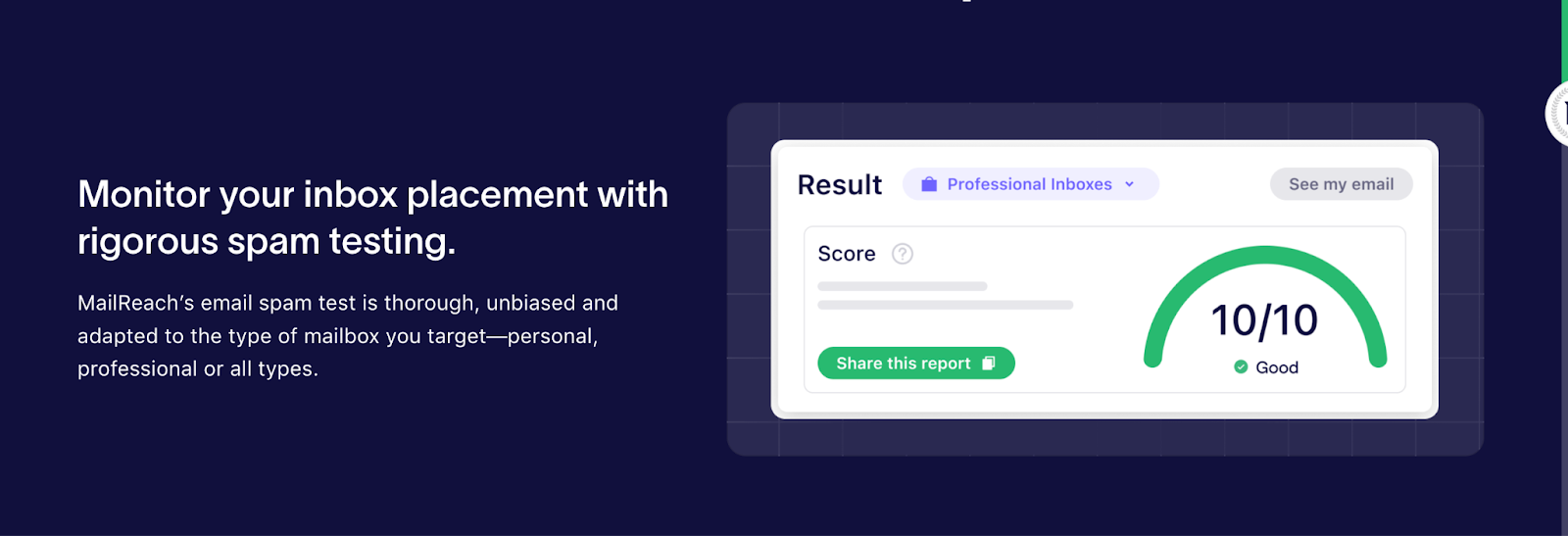
This is the difference between deliverability as a hope and deliverability as something you can verify.
Deliverability rarely breaks all at once, but it can drop suddenly when reputation signals shift.
MailReach gives you inbox-level monitoring so you can spot reputation deterioration early and correct course before an entire sequence dies. Instead of guessing whether the issue is content, list quality, domain health, or provider behavior, you get clearer signals on what’s changing.
The result is simple: you’re not progressing through volume stages. You’re building actual inbox trust and maintaining it as you scale.
If you want to keep GoHighLevel for sending but add a real deliverability layer underneath, connect your sending domain to MailReach via SMTP + IMAP and start warming with real engagement signals.
GoHighLevel is strong at campaign orchestration. It’s built to help you run workflows, manage leads, and keep outbound moving without manual effort. But orchestration isn’t the same thing as sender trust.
Its built-in warmup does one job well: it helps you avoid reckless volume spikes by pacing how quickly a domain ramps. That’s useful but not enough.
But when it comes to B2B outreach, you need trust signals inbox providers respond to, clear inbox placement visibility, and monitoring that flags deliverability drift across multiple inboxes.
Without that, performance drops before you get any clear warning inside the platform. And once you’ve experienced a post-warmup flatline, or burned a domain before, you already know how expensive that “silent failure” can be.
Keep GoHighLevel for what it’s best at: running your sales motion or client workflows.
Then layer MailReach underneath to build and protect sender reputation, simulate the engagement signals that support inbox trust, and monitor inbox outcomes so you can course-correct early.
Start warming and monitoring your inboxes with MailReach, so your GoHighLevel campaigns can scale without guesswork.
Every email in spam equals to a lost potential customer. Start improving your inbox placement today with MailReach spam testing and warmup.
Following the rules isn’t enough—know where your emails land and what’s holding them back. Check your spam score with our free test, and improve deliverability with MailReach warmup.

Without the right warmup, your best campaigns are of no use. You can start by first testing your inbox placement and begin improving it today.

.webp)
Best Smartlead Alternatives for B2B Cold Email Deliverability in 2026

RBL Blacklists: What They Are, Why You’re Listed, and How to Get Delisted

Warmup Inbox Pricing (2026): Plans, Caps, and What You’re Not Getting

In this short article, you’ll find out why you should keep warming an email account that sends email campaigns to get the best email results.

Instantly Warmup Review (2025): How It Compares & Best Alternatives

