Email Warmup GoHighLevel : La réalité de l'email warmup dans GHL
L'email warmup de GoHighLevel est une étiquette de limite d'envoi, pas un moteur d'email warmup automatisé. Découvrez ce qu'il fait réellement et ce qu'il faut ajouter pour améliorer votre délivrabilité.
Risotto est un leader du Zero Trust runtime-first avec la surveillance eBPF, l'application dynamique du moindre privilège et l'automatisation de la conformité.
Risotto est un leader du Zero Trust runtime-first avec la surveillance eBPF, l'application dynamique du moindre privilège et l'automatisation de la conformité.
Risotto est un leader du Zero Trust runtime-first avec la surveillance eBPF, l'application dynamique du moindre privilège et l'automatisation de la conformité.
Vos emails reçoivent-ils le traitement qu'ils méritent dans les boîtes de réception ?
Ne laissez pas votre deliverability au hasard. Effectuez un spam test gratuit et découvrez exactement où atterrissent vos emails, avant que cela ne vous coûte cher.
Vos cold emails ne fonctionneront pas s'ils atterrissent dans les spams. Faites un email warmup.
Les filtres anti-spam jugent vos emails en fonction de leur taux d'engagement. Nous nous assurons qu'il est toujours élevé, pour que vous ne manquiez jamais la boîte de réception.
Les filtres anti-spam sont impitoyables. Battez-les avec MailReach.
Chaque email qui atterrit dans le spam est une opportunité gâchée. Lance un spam test gratuit maintenant et découvre ce qui t’empêche d'arriver dans la boîte de réception.
Sur liste noire (blacklist)? Découvre si cela nuit à ta deliverability.
Certaines blacklists n'ont pas d'importance, mais d'autres peuvent nuire à ta réputation d'expéditeur. Vérifie ton statut maintenant et vois si cela affecte ton placement dans la boîte de réception.
La deliverability est la pièce manquante de ta stratégie d'email.
Même les campagnes les plus stratégiques échouent si elles se retrouvent bloquées dans le spam. Assure-toi que ton meilleur travail porte ses fruits. Lance un test de placement gratuit pour voir où tes emails atterrissent réellement.
Ne laisse pas des problèmes d'email basiques te coûter des leads.
Des éléments fondamentaux mal configurés pourraient nuire à ta deliverability. Teste la configuration de tes emails maintenant et assure-toi d'être prêt pour la boîte de réception.
Vous avez envoyé des emails via GoHighLevel et vu votre domaine marqué comme "warmed up", mais vos métriques sont toujours en chute libre, avec moins de réponses, des ouvertures plus faibles et des séquences qui ne décollent pas.
Voici pourquoi.
L'email warmup de GoHighLevel est mieux compris comme un warmup de type "ramp-and-cap", pas un warmup d'engagement.
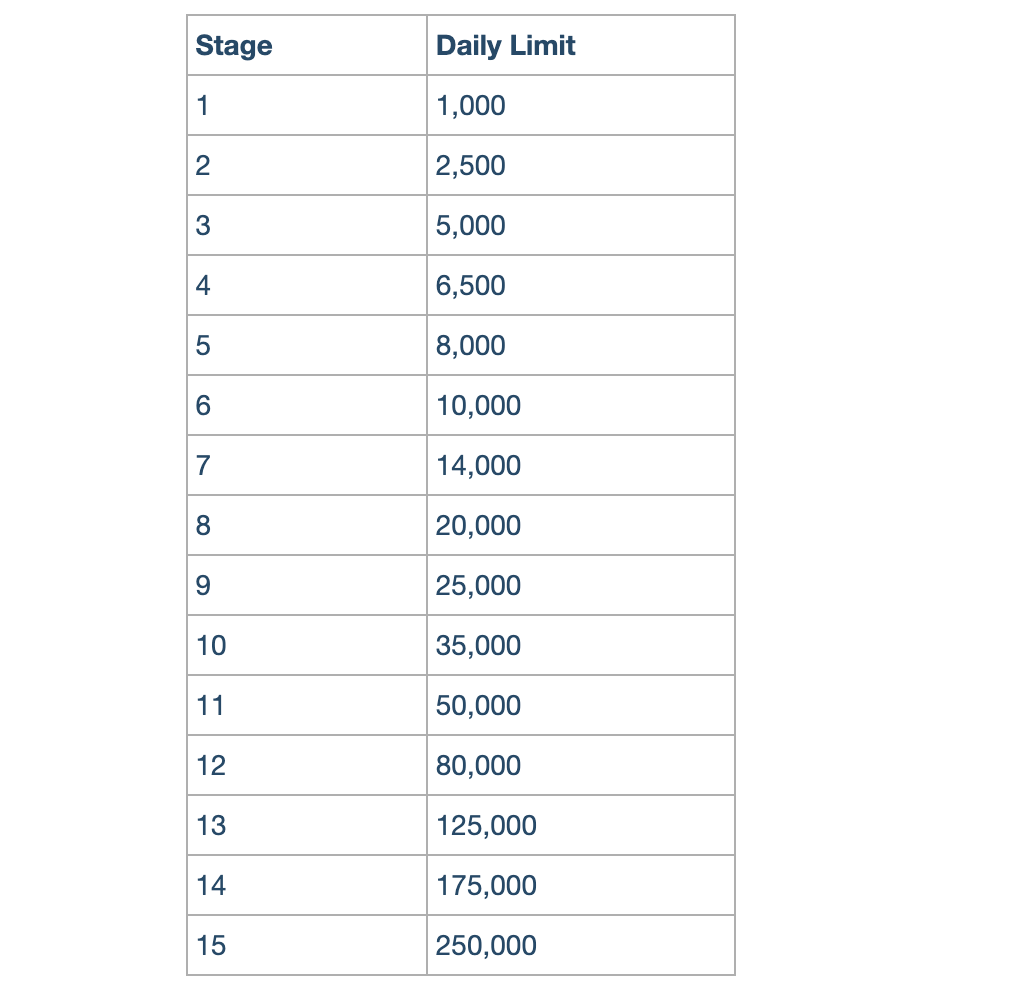
Leur propre documentation présente le warmup comme un modèle à étapes fixes qui contrôle la vitesse à laquelle un domaine d'envoi augmente son volume quotidien.
En pratique, cela signifie que GoHighLevel n'effectue pas d'envois de warmup séparés en arrière-plan. Le warmup progresse en fonction des emails que vous envoyez déjà via la plateforme, avec des limites en place pour éviter les pics soudains qui pourraient signaler un nouveau domaine prématurément.
C'est toujours une forme de warmup valide. C'est juste destiné à un risque spécifique : l'envoi excessif trop rapide.
Là où les équipes se perdent, c'est en supposant que le "warmup" ici couvre aussi ce sur quoi les outils de délivrabilité dédiés se concentrent : construire la confiance via des schémas d'engagement, surveiller le placement en boîte de réception, et si la réputation diminue à mesure que le volume augmente.
Le warmup de GoHighLevel n'est pas conçu pour cette couche.
Donc, si votre objectif est simplement d'éviter les erreurs de "ramp" imprudentes, le warmup de GoHighLevel peut vous aider.
Mais si votre objectif est la délivrabilité pour la prospection à froid, un placement stable en boîte de réception, une alerte précoce quand les choses dérapent, et un soutien pour votre réputation à mesure que vous scalez, vous aurez généralement besoin d'une couche dédiée en dessous.
Ce que l'email warmup de GoHighLevel fait réellement (et ne fait pas)
D'abord, définissons ce que GoHighLevel fait vraiment.
Quand le warmup est activé pour un domaine LC Email dédié, GoHighLevel applique une limite d'envoi quotidienne liée à l'étape de warmup actuelle de votre domaine. Il ne "warme" rien en arrière-plan. Votre domaine ne "warme" que dans la mesure où vous envoyez de vrais emails via GoHighLevel en utilisant ce domaine.
Si vous n'envoyez pas assez ce jour-là, rien ne change. Si vous atteignez le seuil du jour, vous êtes éligible pour avancer selon le modèle à étapes fixes.
Opérationnellement, cela vous apporte trois choses :
Force une "ramp" plus lente afin que les domaines nouveaux ou précédemment inactifs n'augmentent pas soudainement leur volume et ne déclenchent pas de filtrage ou de mesures d'application. C'est l'intention principale.
Vous offre un contrôle de warmup simple dans les services d'email (démarrer/activer le warmup pour le domaine).
Maintient le warm-up étroitement lié à votre activité d'envoi réelle. Vous ne "warmez" pas dans un "sandbox". Vous envoyez de vrais mails pendant que la plateforme limite l'agressivité avec laquelle vous pouvez scaler au quotidien.
Ce qu'il ne fait pas (et où il échoue pour la prospection à froid)
Le problème est que gérer le volume n'est pas la même chose que prouver la confiance en boîte de réception, surtout pour l'email froid B2B, où le succès dépend entièrement du placement et de l'engagement.
Il ne prouve pas la préparation à la prospection à froid
Parce que GoHighLevel n'envoie pas d'emails de warmup pour vous, il ne vous connecte pas à un réseau de warmup, et il ne génère pas les signaux d'engagement dont dépend réellement la délivrabilité de la prospection à froid (ouvertures, réponses, "non spam", déplacement des messages hors du spam, marquage comme important, activité de fil de discussion).
Du coup, une étape de warmup, ou même un simple label « warmup terminé », ne te garantit pas que tes campagnes de prospection arriveront bien en boîte de réception.
Ça te dit juste que tu as respecté les limites de volume de la plateforme, et ce n'est pas super utile pour les équipes de prospection B2B. En effet, la toute première étape d'envoi démarre à 1 000 e-mails par jour, ce qui est déjà bien plus que ce qu'une bonne configuration de prospection à froid devrait envoyer depuis un seul domaine en une journée.
Les numéros d'étape sont pensés pour les envois en très grand volume et ne sont pas adaptés à la prospection à froid B2B.
C'est pour ça que ce label peut induire les utilisateurs en erreur s'ils ne connaissent pas les limites du email warmup de GoHighLevel. Si tes priorités sont d'avoir un placement constant en boîte de réception et des réponses, il te faudra une couche supplémentaire de warmup de domaine.
Ça ne te donne aucune visibilité sur le placement en boîte de réception, ni d'alerte précoce.
Ça peut montrer que les e-mails ont été envoyés, mais ça ne te dira pas où ils ont atterri (Principal, Promotions ou Spam), si le placement en spam augmente avec le temps, ou si la réputation de l'expéditeur est en train de baisser discrètement.
Et même si la livraison est techniquement « réussie », la performance dépend toujours de facteurs que GoHighLevel ne mesure pas pour toi : la qualité de ta liste, ton ciblage, la pertinence de ton message, et si les vrais destinataires interagissent.
Sans visibilité sur le placement et sans boucle de feedback, tu ne peux que deviner si une baisse des réponses est due à un problème de campagne, de liste ou de délivrabilité, et ce, jusqu'à ce que les dégâts soient déjà là.
Maintenant, c'est clair, GoHighLevel utilise le mot « warmup » de manière très vague. Si tu cherchais une plateforme unique qui gère à la fois tes campagnes et le warmup de délivrabilité comme un système à part entière, ce n'est pas ce que tu trouveras ici.
Du coup, la question n'est pas de savoir si GoHighLevel est « bon » ou « mauvais ».
C'est plutôt de savoir si une plateforme d'envoi gérée par un CRM peut aussi servir de couche de délivrabilité. Dans la plupart des configurations de prospection à froid B2B, quand le volume et les enjeux augmentent, tu as besoin de quelque chose conçu spécifiquement pour la délivrabilité, et non d'une simple fonctionnalité supplémentaire dans ton outil de campagne.
Pourquoi le warmup intégré échoue souvent à grande échelle
Les plateformes gérées par un CRM peuvent être excellentes pour lancer des campagnes, mais leurs fonctionnalités de warmup sont généralement conçues comme des garde-fous de volume, et non comme de véritables systèmes de délivrabilité.
Voici ce qui se passe quand tu te reposes sur les fonctionnalités de montée en puissance intégrées pour ton plan de délivrabilité, surtout quand le volume et les enjeux augmentent.
Le passage à l'échelle rend la répétition flagrante
À faible volume, tu peux te permettre d'avoir des schémas. Mais à plus grand volume, ces schémas deviennent de véritables empreintes digitales.
Quand tu commences à envoyer à des centaines, voire des milliers de destinataires, les fournisseurs de boîtes de réception ont une vision plus nette de ce à quoi ressemble vraiment ton trafic. Si tes envois sont trop uniformes (même structure, même cadence, mêmes types de liens, même style de formulation d'un lot à l'autre), les filtres sont de plus en plus convaincus qu'il s'agit de prospection automatisée. Même si le contenu n'est pas « spammy », la répétition en elle-même représente un risque.
C'est là que le manque de diversité se fait le plus sentir. Ce qui te semblait être un « message cohérent » à 50 envois par jour peut vite ressembler à de l'« automatisation de masse » à 500 envois par jour.
Les petits problèmes de liste et de contenu s'accumulent.
Le passage à l'échelle augmente le coût des imperfections.
Quelques rebonds à faible volume, c'est juste du bruit. Mais à grande échelle, ils se transforment en un véritable signal de taux de rebond. Un message qui génère un engagement modéré à faible volume peut encore passer inaperçu.
À grande échelle, un faible engagement devient un signal négatif beaucoup plus fort, car tu génères plus de preuves que les destinataires n'interagissent pas.
Les plateformes d'envoi continueront tranquillement à exécuter les workflows pendant que les fournisseurs de boîtes de réception te déclasseront discrètement. Au moment où tu le remarqueras, à cause de la baisse des réponses et des appels réservés, tu auras déjà passé des jours à renforcer les mauvais signaux à un volume plus élevé.
La récupération devient alors un véritable exercice de réinitialisation : il faut réduire les envois, reconstruire sa réputation, et parfois même créer de nouveaux actifs d'envoi pour retrouver une certaine cohérence.
L'email warmup de GoHighLevel n'est qu'une simple couche de régulation.
C'est aussi là que la limite propre à GoHighLevel devient plus flagrante.
Il faut reconnaître à GoHighLevel que sa documentation est claire sur ce que son email warmup est censé faire : gérer la progression des envois via un modèle de montée en puissance par étapes et réduire le risque de pics de volume soudains sur un domaine d'envoi dédié.
C'est utile pour la régulation. Mais ce n'est pas la même chose qu'une gestion continue de la délivrabilité.
Une fois les campagnes lancées, les équipes ont besoin de plus qu'une simple étiquette de montée en puissance. Elles doivent savoir si les emails arrivent toujours là où ils devraient, si la réputation se maintient et si les baisses de performance sont causées par le ciblage, le contenu ou un décalage dans le placement en boîte de réception.
Les fonctionnalités d'email warmup intégrées ne fournissent généralement pas ce niveau de visibilité, et GoHighLevel ne fait pas exception.
Vous pouvez continuer à envoyer, à progresser opérationnellement, et rater quand même les premiers signes d'affaiblissement de la délivrabilité. La plateforme continue donc d'exécuter, mais vous n'obtenez pas la boucle de rétroaction nécessaire pour protéger la performance à long terme de votre boîte de réception.
Quand avez-vous besoin de plus que GoHighLevel ?
L'email warmup de GoHighLevel est suffisant pour ce qu'il est : un système de montée en puissance qui évite aux nouveaux domaines de faire n'importe quoi.
Mais il y a des moments précis où ce n'est pas suffisant, car le problème que vous essayez de résoudre n'est pas « à quelle vitesse on peut augmenter les envois quotidiens », mais plutôt de savoir si vos mails arrivent réellement, restent stables et se développent sans surprises.
Vous gérez plus d'une boîte de réception (ou plus d'un domaine)
Une fois que vous gérez une flotte, des représentants, des marques et des sous-comptes, la délivrabilité devient incohérente par défaut. Vous n'avez pas besoin d'une étiquette d'étape. Vous devez maintenir un placement cohérent dans chaque boîte de réception et repérer les anomalies avant qu'elles ne fassent chuter les performances.
Vérifications d'authentification
C'est la base qui détermine si vos envois sont dignes de confiance. GoHighLevel peut appliquer des limites d'envoi, mais ce n'est pas une couche de contrôle de la délivrabilité qui signale en continu les dérives d'authentification.
Ce que les outils d'email warmup dédiés comme MailReach apportent ici :
Des vérifications automatisées de SPF, DKIM et DMARC sur votre domaine d'envoi pour que vous puissiez détecter les enregistrements manquants ou mal alignés avant qu'ils ne fassent chuter le placement.
Une surveillance continue, pas une validation de configuration unique. Si quelque chose change (modifications DNS, changement de fournisseur, déplacement de domaine), vous recevez un signal au lieu de le découvrir via un effondrement du taux de réponse.
Une détection d'erreurs concrètes, comme un enregistrement manquant, cassé ou défaillant, pour que vous ne fassiez pas de dépannage à l'aveugle pendant que les campagnes continuent de tourner.
Vous passez à un rythme d'envoi quotidien
À un volume plus élevé, de petits décalages de placement créent de grandes variations dans les réponses. « C'est envoyé » n'est plus un signal utile. Vous devez savoir si vous arrivez toujours en boîte de réception, et vous avez besoin d'une lecture rapide lorsque ça change.
Vous êtes pressé par le temps
Nouvel onboarding client, nouveau domaine, nouvelle offre, délai court. Vous ne pouvez pas vous permettre une semaine de « tout semble configuré » alors que les résultats ne se manifestent pas. Vous avez besoin d'une couche d'email warmup qui construit activement des signaux de confiance et réduit le risque de lancement.
Vous essayez de récupérer un domaine en difficulté
Si la confiance est déjà endommagée, la régulation ne résout pas le problème de réputation sous-jacent. Vous avez besoin de diagnostics pour identifier ce qui ne va pas, et de preuves que la confiance s'améliore, pas juste un envoi plus lent.
Vous essayez de scaler sous des exigences d'expéditeur plus strictes
Lorsque vous opérez près du comportement de « bulk sender », la discipline d'authentification et le contrôle des plaintes sont importants.
Gmail et Outlook ont relevé la barre pour ce qui est considéré comme un envoi acceptable pour les expéditeurs de masse, surtout en ce qui concerne l'authentification et la gestion du taux de plaintes (beaucoup d'équipes visent à maintenir les plaintes sous 0,3 %).
Si vous essayez de développer votre prospection à froid de manière responsable, vous avez besoin de boucles de feedback plus précises et de diagnostics plus clairs que ce qu'un plafond quotidien par étape peut offrir, ce qui nous amène à notre prochaine section.
Ce que MailReach apporte et pourquoi il s'intègre sous GoHighLevel
MailReach ne remplace pas GoHighLevel. Il se positionne en dessous.
GoHighLevel est l'endroit où vous construisez des workflows, déclenchez des envois et lancez des campagnes. MailReach est la couche qui permet à ces envois d'atterrir plus régulièrement, en construisant et en maintenant la confiance de l'expéditeur grâce à des signaux que vous pouvez réellement voir.
Signaux de warmup orientés B2B (qualité du réseau, pas la "taille du réseau")
MailReach effectue un email warmup automatisé pour vous en arrière-plan. Il connecte votre expéditeur à un réseau de plus de 30 000 boîtes de réception, composé principalement de comptes Google Workspace et Microsoft 365, et génère automatiquement l'activité de warmup censée créer : de vrais envois, de vraies réponses et des signaux d'engagement positifs (y compris des actions de "sauvetage" de spam si nécessaire).
Un seul outil pour gérer la délivrabilité sur plusieurs boîtes de réception.
Ainsi, au lieu de gagner une "étiquette de warmup" basée sur le volume d'envois via GoHighLevel, vous construisez une confiance mesurable dans la boîte de réception grâce à un engagement continu et piloté par le réseau.
Visibilité du placement avant que les campagnes ne soient impactées
GoHighLevel peut vous dire qu'un email a été envoyé. Mais il ne peut pas vous dire où il a atterri.
MailReach comble cette lacune avec des spam tests d'emails (boîte de réception vs promotions vs spam), afin que vous puissiez détecter les problèmes de placement avant qu'ils ne se manifestent par des "taux de réponse en baisse" ou un "plateau général".
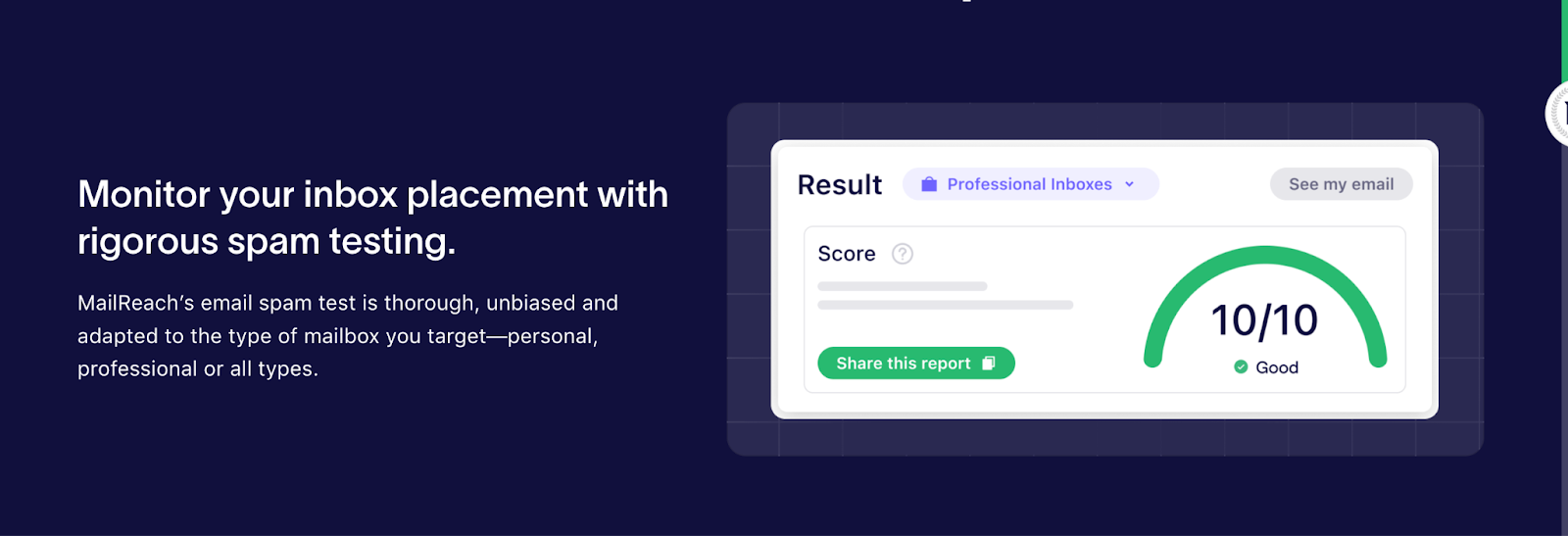
Les spam tests de MailReach vous montrent où vos emails atterrissent dans les boîtes de réception professionnelles.
C'est la différence entre la délivrabilité comme un espoir et la délivrabilité comme quelque chose que vous pouvez vérifier.
Surveillance continue et diagnostics au niveau de la boîte de réception.
La délivrabilité ne s'effondre que rarement d'un coup, mais elle peut chuter soudainement lorsque les signaux de réputation changent.
MailReach vous offre une surveillance au niveau de la boîte de réception afin que vous puissiez détecter la détérioration de la réputation tôt et corriger le tir avant qu'une séquence entière ne meure. Au lieu de deviner si le problème vient du contenu, de la qualité de la liste, de la santé du domaine ou du comportement du fournisseur, vous obtenez des signaux plus clairs sur ce qui change.
Le résultat est simple : vous ne progressez pas par étapes de volume. Vous construisez une véritable confiance dans la boîte de réception et la maintenez à mesure que vous évoluez.
Développez la prospection GoHighLevel avec la délivrabilité MailReach.
GoHighLevel est puissant pour l'orchestration de campagnes. Il est conçu pour vous aider à gérer des workflows, des leads et à maintenir vos activités outbound sans effort manuel. Mais l'orchestration n'est pas la même chose que la confiance de l'expéditeur.
Son warmup intégré fait bien une chose : il vous aide à éviter les pics de volume imprudents en régulant la vitesse à laquelle un domaine monte en puissance. C'est utile, mais pas suffisant.
Mais quand il s'agit de prospection B2B, vous avez besoin de signaux de confiance auxquels les fournisseurs de boîtes de réception réagissent, d'une visibilité claire sur le placement en boîte de réception, et d'une surveillance qui signale les dérives de délivrabilité sur plusieurs boîtes de réception.
Sans ça, les performances chutent avant même que tu aies le moindre avertissement clair dans la plateforme. Et si tu as déjà connu un "plat" après un email warmup, ou "brûlé" un domaine, tu sais déjà à quel point cet "échec silencieux" peut coûter cher.
Garde GoHighLevel pour ce qu'il fait de mieux : gérer tes processus de vente ou les workflows clients.
Ensuite, ajoute MailReach en dessous pour construire et protéger ta réputation d'expéditeur, simuler les signaux d'engagement qui renforcent la confiance des boîtes de réception, et surveiller les résultats pour que tu puisses corriger le tir rapidement.
Les problèmes de deliverability coûtent cher. Corrigez-les rapidement.
Chaque email dans le spam équivaut à un client potentiel perdu. Commencez dès aujourd'hui à améliorer le placement de vos emails dans la boîte de réception grâce aux spam tests et au warmup de MailReach.
Offre de printemps : Obtenez 20 % de réduction pendant les 30 premiers jours de warmup de votre première boîte mail – Commencez maintenant 🎉
Uniquement pour l'activité de cold outreach B2B
Vos emails ne peuvent pas stimuler la croissance si personne ne les voit.
Que vous envoyiez des emails de prospection ou que vous fassiez un suivi auprès de leads, un bon warmup garantit que vos emails soient vus. Assurez-vous que vos meilleures campagnes ne soient pas gaspillées.
Assurez-vous que vos emails atteignent la boîte de réception.
Une blacklist seule ne va pas toujours ruiner votre deliverability, mais ça vaut la peine de vérifier. Analysez les problèmes, effectuez un spam test et obtenez des prochaines étapes claires.
Vos cold emails B2B méritent une excellente deliverability.
Suivre les règles ne suffit pas—sachez où atterrissent vos emails et ce qui les retient. Vérifiez votre spam score avec notre test gratuit et améliorez la deliverability avec le warmup MailReach.
Commencez à utiliser MailReach dès maintenant et profitez de 20% de réduction sur le premier mois de notre plan Pro.
Des bases solides. Une deliverability parfaite. Commencez ici.
Vérifiez ce qui est à l'origine de vos problèmes d'email, corrigez ce qui est cassé et améliorez la deliverability grâce à des informations exploitables.
Arrêtez de perdre des revenus à cause d'une mauvaise deliverability.
Une mauvaise configuration du domaine ou des problèmes d'email pourraient vous empêcher d'atteindre les boîtes de réception. Testez la santé de vos emails et corrigez-la en quelques minutes.
Sans le bon warmup, vos meilleures campagnes ne servent à rien. Vous pouvez commencer par tester votre placement en boîte de réception et commencer à l'améliorer dès aujourd'hui.
Les blacklists empêchent-elles vos emails d'arriver dans la boîte de réception ?
Ce n'est pas parce que vous êtes listé que votre deliverability est condamnée. Lancez un spam test pour voir si vos emails arrivent réellement ou s'ils sont bloqués.
Vous pensez que votre cold outreach ne fonctionne pas ? Vérifions ça.
De superbes emails ont besoin d'une excellente deliverability. Testez votre placement maintenant et assurez-vous que vos emails arrivent là où ils devraient.
Dans ce court article, tu découvriras pourquoi tu devrais continuer à warmer un compte email qui envoie des campagnes email pour obtenir les meilleurs résultats.

 Email Warmup




.webp)