Wie du die B2B-Posteingangsplatzierung durch KI-E-Mail-Zustellbarkeit verbesserst
Erfahre, wie KI die E-Mail-Zustellbarkeit im Jahr 2026 beeinflusst und wie Email Warmup, Spam-Tests und Reputationsmanagement die B2B-Posteingangsplatzierung verbessern.
AI Email-Zustellbarkeit bezieht sich auf die Praxis, die Zustellung in den Posteingang bei E-Mail-Anbietern wie Google und Microsoft sicherzustellen, die maschinelle Lernsysteme nutzen, um das Absenderverhalten, das Engagement und die Domain-Reputation kontinuierlich zu bewerten.
Im Gegensatz zu traditionellen, regelbasierten Zustellbarkeitsmethoden, die auf statischen Überprüfungen, einmaligen Audits und festen Schwellenwerten basieren, bewertet die KI-gesteuerte Filterung das Vertrauen in den Absender nahezu in Echtzeit neu, basierend auf Verhaltensmustern und der Interaktion der Empfänger.
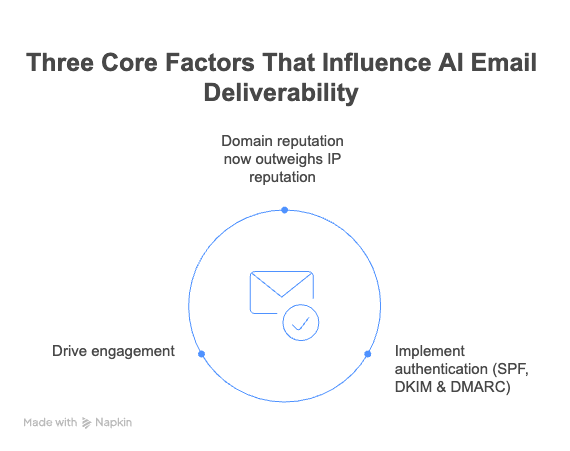
Drei Kernfaktoren prägen die AI Email-Zustellbarkeit: die Domain-Reputation (die jetzt die IP-Reputation übertrifft), die korrekte Authentifizierung über SPF, DKIM und DMARC (die als zwingende Voraussetzungen und nicht als Unterscheidungsmerkmale behandelt werden) und Engagement-Muster, die die Absender-Reputationswerte dynamisch aktualisieren.
KI-Posteingangssysteme priorisieren starke Engagement-Signale gegenüber Öffnungsraten, insbesondere Antworten, positive Antworten, Klicks, als wichtig markierte E-Mails und fortgesetzte Konversationen, da Datenschutzmaßnahmen und Proxy-Öffnungen die Öffnungsraten unzuverlässig machen.
Negative Engagement-Signale – darunter E-Mails, die ohne Interaktion gelöscht wurden, ignorierte Nachrichten, E-Mails, die als Spam markiert oder belassen wurden, und Volumen-Spitzen, gefolgt von Engagement-Rückgängen – lassen die Reputationswerte unter KI-Filtermodellen schnell sinken.
Inhalte beeinflussen die Zustellbarkeit indirekt durch das Verhalten, das sie hervorrufen; Nachrichten, die keine Antworten oder Interaktionen generieren, schwächen das Domain-Vertrauen im Laufe der Zeit, da KI-Systeme die Sendemuster entsprechend klassifizieren.
MailReach überwacht Absender-Reputationswerte und Engagement-Trends im Laufe der Zeit und bietet email warmup, Spam-Tests, Blacklist-Überprüfungen und Posteingangs-Platzierungs-Tests an, mit einem Einführungsrabatt von 20 % für die ersten 30 Tage des email warmings einer ersten Mailbox.
Risotto ist führend im Runtime-First Zero Trust mit eBPF-Monitoring, dynamischer Least-Privilege-Durchsetzung und Compliance-Automatisierung.
Risotto ist führend im Runtime-First Zero Trust mit eBPF-Monitoring, dynamischer Least-Privilege-Durchsetzung und Compliance-Automatisierung.
Risotto ist führend im Runtime-First Zero Trust mit eBPF-Monitoring, dynamischer Least-Privilege-Durchsetzung und Compliance-Automatisierung.
Bekommen deine E-Mails die Inbox-Behandlung, die sie verdienen?
Überlasse deine E-Mail-Zustellbarkeit nicht dem Zufall. Führe einen kostenlosen Spam-Test durch und finde heraus, wo genau deine E-Mails landen – bevor es dich etwas kostet.
Spamfilter sind gnadenlos. Besiege sie mit MailReach.
Jede E-Mail im Spam ist eine verschwendete Gelegenheit. Führe jetzt einen kostenlosen Spam-Test durch und finde heraus, was dich davon abhält, in der Inbox zu landen.
Auf der Blacklist? Finde heraus, ob es deiner Deliverability schadet.
Manche Blacklists sind egal – aber einige können deiner Sender-Reputation schaden. Überprüfe jetzt deinen Status und sieh nach, ob es deine Inbox-Platzierung beeinträchtigt.
Deliverability ist das fehlende Puzzleteil deiner E-Mail-Strategie.
Selbst die besten Kampagnen scheitern, wenn sie im Spam landen. Stell sicher, dass deine harte Arbeit auch Ergebnisse bringt. Mach einen kostenlosen Placement Test, um zu sehen, wo deine E-Mails wirklich landen.
Lass dir nicht von simplen E-Mail-Problemen Leads kosten.
Falsch konfigurierte Grundlagen könnten deine Deliverability beeinträchtigen. Teste jetzt dein E-Mail-Setup und stell sicher, dass du inbox-ready bist.
Die Zustellung in den Posteingang ist heute eines der größten Hindernisse für das Outbound-Wachstum. Da Mailbox-Anbieter zunehmend auf KI-gesteuerte Filtertools setzen, verlieren manuelle und regelbasierte Zustellbarkeits-Taktiken an Wirksamkeit.
Google und Microsoft nutzen maschinelle Lernsysteme, die auf Engagement, Senderverhalten und Reputationssignalen trainiert sind, um die Zustellung in den Posteingang zu entscheiden. Diese Systeme sind schneller und strenger als je zuvor. Kleine Probleme, die früher einen allmählichen Reputationsverlust verursachten, können jetzt eine sofortige Spam-Platzierung auslösen.
Was sich nicht geändert hat, sind die Grundlagen. Senderreputation, Inhaltsrisiko und Versandkonsistenz bestimmen immer noch die Zustellbarkeit. KI setzt diese Regeln einfach effizienter durch, erkennt Probleme früher und verhängt Strafen schneller.
In diesem Artikel erklären wir, wie KI die E-Mail-Zustellbarkeit beeinflusst, was moderne KI-gesteuerte Zustellbarkeitsmethoden erfordern und wie sich B2B-Outbound-Teams anpassen können, um die Zustellung in den Posteingang zu verbessern.
Was unterscheidet die KI-E-Mail-Zustellbarkeit von traditionellen Methoden?
Traditionelle Zustellbarkeits-Taktiken wurden für eine regelbasierte Posteingangs-Umgebung entwickelt, während moderne Mailbox-Anbieter anders vorgehen. Sie nutzen KI-Modelle, die das Senderverhalten und das Empfänger-Engagement kontinuierlich über die Zeit bewerten.
Traditionelle Zustellbarkeitsmethoden basieren auf statischen Prüfungen und festen Schwellenwerten. Sie konzentrieren sich darauf, offensichtliche Spam-Auslöser zu vermeiden und die technische Einrichtung, wie Authentifizierung und Sendelimits, zu validieren. Diese Praktiken sind immer noch erforderlich, aber sie stellen die Grundlage dar und nicht die Logik, die Mailbox-Anbieter verwenden, um die Zustellung in den Posteingang zu entscheiden.
KI-E-Mail-Zustellbarkeit hingegen ist verhaltensbasiert. Anstatt zu fragen, ob eine E-Mail eine Checkliste besteht, bewerten KI-Modelle, ob ein Absender das Vertrauen der Empfänger konsequent gewinnt.
Kriterien
Traditionelle Deliverability-Methoden
KI-gesteuerte E-Mail-Deliverability
Bewertungsmodell
Statische Regeln und einmalige Checks
Kontinuierliche Verhaltensanalyse
Content-Überprüfung
Vermeidet Spam-Wörter und Formatierungs-Trigger
Bewertet, wie Empfänger mit der Nachricht interagieren
Authentifizierung
Prüft SPF, DKIM und DMARC einmalig
Bewertet das Vertrauen nach der Authentifizierung kontinuierlich neu
Versandlimits
Feste Tageslimits
Lernt aus der Versandkonsistenz über die Zeit
Datenumfang
Basiert auf isolierten Kampagnendaten
Analysiert das historische Verhalten auf Domain-Ebene
Reputationsauswirkungen
Spiegelt Reputationsschäden nur langsam wider
Passt Filterentscheidungen nahezu in Echtzeit an
Gesamtansatz
Checklistenbasierte Validierung
Laufende Bewertung des Trust Scores
Warum versagen traditionelle Tools in KI-gesteuerten Postfächern?
Ältere Deliverability-Tools wurden für statische Umgebungen entwickelt. KI-gesteuerte Postfächer sind dynamisch. Sie versagen aus drei Hauptgründen:
1. Sie verlassen sich auf statische Checks. Spam-Wort-Scans, Link-Zählungen und einmalige Authentifizierungstests erfassen kein Engagement-basiertes Scoring. Eine Domain kann jeden technischen Check bestehen und trotzdem im Spam landen, wenn die Interaktion der Empfänger zurückgeht.
2. Sie arbeiten in Momentaufnahmen. Einmalige Audits übersehen eine allmähliche Verschlechterung des Rufs, die durch kleine Engagement-Rückgänge, unregelmäßige Versandmuster oder Volumen-Spitzen verursacht wird. KI-Filtermodelle bewerten das Vertrauen kontinuierlich neu.
3. Sie reagieren zu langsam. Manuelle Überprüfungen und regelmäßige Tests können nicht mit KI-Feedback-Loops mithalten, die die Zustellung in den Posteingang anpassen, sobald sich Verhaltensmuster zeigen.
Mailbox-Anbieter kümmern sich weniger darum, wie eine E-Mail aufgebaut ist, sondern mehr darum, wie Empfänger darauf reagieren. Die KI-E-Mail-Deliverability priorisiert Signale wie:
Antwort- und positive Antwortraten
Aus dem Spam-Ordner verschobene E-Mails
Beständigkeit des Versandverhaltens im Laufe der Zeit
Engagement-Trends auf Domain-Ebene
Statische Regeln können sich diesen Dynamiken nicht anpassen, KI-Systeme hingegen schon. Deshalb sind kontinuierliches Monitoring und Engagement-Management jetzt unerlässlich, um die Inbox Placement zu gewährleisten.
3 Kernfaktoren, die die KI-E-Mail-Deliverability beeinflussen
KI-gesteuerte Posteingangsfilterung basiert auf denselben Grundlagen, die schon immer die Deliverability definiert haben. Was sich geändert hat, ist die Geschwindigkeit und Strenge der Durchsetzung. Mailbox-Anbieter bewerten das Vertrauen auf Domain-Ebene jetzt kontinuierlich neu, indem sie technische Signale mit Engagement-Daten kombinieren.
Faktoren, die die KI-E-Mail-Deliverability beeinflussen
1. Die Domain-Reputation überwiegt jetzt die IP-Reputation
In modernen Posteingängen ist die Domain-Reputation das primäre Vertrauenssignal. Die IP-Reputation spielt in einigen Szenarien mit hohem Volumen immer noch eine Rolle, aber die KI-basierte Filterung konzentriert sich darauf, wie sich eine Domain im Laufe der Zeit verhält.
Mailbox-Anbieter bewerten:
Engagement-Trends, die mit der sendenden Domain verbunden sind
Beständigkeit der ausgehenden Aktivitäten
Historische Spam-Beschwerden und negative Interaktionen
Deshalb funktioniert das Rotieren von IPs oder das Verlassen auf eine saubere Infrastruktur nicht mehr. KI-Systeme korrelieren das Verhalten über Kampagnen und Domains hinweg. Wenn das Engagement schwach oder inkonsistent ist, leidet die Inbox Placement, unabhängig von der IP-Qualität.
2. SPF, DKIM und DMARC sind Pflicht, keine Unterscheidungsmerkmale
Mailbox-Anbieter erwarten von legitimen Absendern, dass sie Folgendes haben:
SPF-Einträge, die sendende Quellen autorisieren
DKIM-Signaturen, die die Nachrichtenintegrität validieren
DMARC-Alignment, das Spoofing verhindert
Ohne ordnungsgemäße Authentifizierung wird das Vertrauen sofort herabgestuft oder die Zustellung blockiert. Damit sind Absender lediglich berechtigt, nach Engagement und Verhalten bewertet zu werden.
Perfekte Authentifizierung wird von der KI nicht belohnt. Sie bestraft Fehlkonfigurationen. Sobald die Authentifizierung korrekt eingerichtet ist, tritt sie in den Hintergrund und Reputationssignale erhalten Priorität.
3. Engagement-Muster prägen direkt die Reputation Scores
KI-Systeme aktualisieren ständig die Reputation Scores von Absendern, basierend auf dem Verhalten der Empfänger. Reputation ist dynamisch, nicht statisch.
Wenn negative Engagement-Muster konstant werden, sinken die Reputation Scores und Filterentscheidungen passen sich schnell an. Die Inbox-Platzierung folgt der Reputation.
Plattformen wie MailReach überwachen Reputations-Trends im Laufe der Zeit mithilfe von Reputation Scores. Das hilft B2B-Outbound-Teams, Engagement-Verschiebungen frühzeitig zu erkennen und das Domain-Vertrauen zu stabilisieren, bevor die Inbox-Platzierung sinkt.
Fehlkonfigurierte oder neu gestartete Domains verstärken diese Signale. KI-Modelle priorisieren den Schutz der Inbox-Nutzer, was bedeutet, dass die Erholungsphasen kurz sind, sobald sich die Engagement-Muster verschlechtern.
Wichtig ist, dass Engagement-Muster ein Spiegelbild der Content-Relevanz sind. Nachrichten, die kein Interesse wecken, führen zu schwachen Interaktionssignalen. Im Laufe der Zeit prägen diese Muster, wie KI-Systeme deine Domain klassifizieren.
Wie Engagement und Content KI-Inbox-Entscheidungen prägen
In KI-gesteuerten Inboxes wird Content nicht isoliert bewertet. Mailbox-Anbieter scannen E-Mails nicht einfach nach Keywords und treffen eine Filterentscheidung. Stattdessen beobachten sie, wie Empfänger im Laufe der Zeit auf den Content reagieren. Engagement ist das messbare Ergebnis der Content-Qualität, und KI-Systeme nutzen diese Engagement-Muster, um das Absendervertrauen zu berechnen.
Mit anderen Worten: Content beeinflusst die Zustellbarkeit durch das Verhalten, das er hervorruft. Wenn Nachrichten Antworten und Konversationen generieren, stärkt sich die Reputation. Wenn sie Gleichgültigkeit oder Reibung erzeugen, sinkt das Vertrauen. Deshalb müssen Engagement und Content bei modernen Inbox-Entscheidungen zusammen betrachtet werden.
Antworten und Interaktionen zählen mehr als Opens
Open Rates sind ein unzuverlässiges Signal. Datenschutzmaßnahmen, Bildblockierung und Proxy-Opens begrenzen ihre Nützlichkeit für Mailbox-Anbieter.
KI-Systeme priorisieren stärkere Indikatoren für Absicht, darunter:
Antworten und positive Antworten
Klicks auf relevante Links
E-Mails, die als wichtig markiert oder in primäre Inboxes verschoben wurden
Konversationen, die über die erste Nachricht hinausgehen
Diese Verhaltensweisen signalisieren echtes Interesse. Eine Kampagne mit moderaten Opens, aber konsistenten Antworten ist gesünder als eine mit vielen Opens und ohne weiteres Engagement. KI-Modelle bevorzugen E-Mails, die Dialoge erzeugen, nicht nur E-Mails, die angesehen werden.
Outbound-Teams, die auf Antworten und Konversationen optimieren, übertreffen konstant Teams, die sich auf oberflächliche Metriken konzentrieren.
Negatives Engagement reduziert die Inbox-Platzierung schnell
Negative Signale haben erhebliches Gewicht. KI-Modelle sind darauf ausgelegt, die Exposition gegenüber unerwünschten E-Mails zu reduzieren, sobald Reibung auftritt.
Signale, die das Vertrauen reduzieren, umfassen:
E-Mails, die ohne Interaktion gelöscht wurden
Nachrichten, die wiederholt ignoriert wurden
E-Mails, die im Spam gelassen oder aktiv als Spam markiert wurden
Das Engagement sinkt nach plötzlichen Volumensteigerungen.
Wenn sich diese Muster wiederholen, sinkt der Ruf des Absenders und die Zustellbarkeit in den Posteingang leidet darunter. KI-Systeme reagieren, sobald sich unerwünschtes Verhalten verfestigt.
Das Skalieren des Volumens, ohne das Engagement zu schützen, birgt ein sofortiges Risiko.
KI erkennt Inhaltsmuster, die zu geringem Engagement führen.
KI bestraft Inhalte nicht einfach, weil sie Vorlagen nutzen. Sie bestraft Inhaltsmuster, die in großem Umfang zu schwachem Engagement führen. Wiederholende Formulierungen, oberflächliche Personalisierung oder unpassende Nachrichten werden zu Risiken, wenn Empfänger ähnliche E-Mails konsequent ignorieren oder löschen. Mit der Zeit verbinden KI-Systeme diese Muster mit geringem Vertrauen.
Ein guter Absenderruf bietet etwas Spielraum. Ist der Ruf intakt, tolerieren Mailbox-Anbieter Tests und Variationen. Schwächt sich der Ruf ab, führen dieselben Inhaltsmuster zu schnellerer Filterung.
Die Autofix AI von MailReach bewertet E-Mail-Inhalte im Kontext des Absenderrufs und der Zustellbarkeit in den Posteingang. Sie identifiziert Inhaltsmuster, die mit Spam-Platzierung korrelieren, selbst wenn der Absenderruf hoch ist.
Autofix AI kann Folgendes markieren:
Inhaltsprobleme, die zu Spam führen
Formatierungs- oder Link-Elemente, die das Spam-Risiko trotz korrekter Authentifizierung erhöhen
MailReach AI Email Warmup mit integriertem Autofix zur Spam-Wiederherstellung
Bereite deine Domain auf KI vor mit den richtigen Deliverability Tools
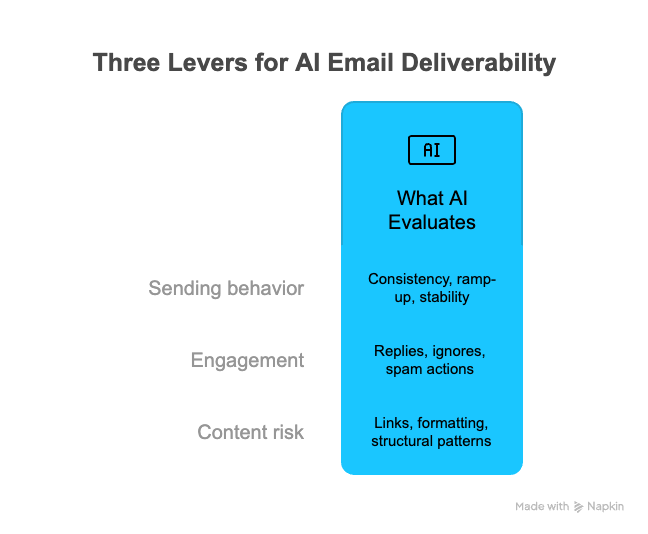
Drei Hebel für KI-Email-Deliverability
Die Zustellbarkeit in den Posteingang wird auf Domain-Ebene basierend auf dem Verhalten über die Zeit bestimmt. Um das Vertrauen der Mailbox-Anbieter-KI zu gewinnen und zu erhalten, müssen B2B-Outbound-Teams drei Hebel kontrollieren:
Vorhersehbares Sendeverhalten Ein schrittweiser Anstieg und ein konstantes tägliches Volumen helfen der KI, eine Domain mit stabiler, menschenähnlicher Aktivität zu assoziieren. Plötzliche Spitzen oder unregelmäßige Muster signalisieren ein Risiko und begrenzen die Zustellbarkeit in den Posteingang.
Anhaltende Engagement-Signale Antworten, positive Antworten und Spam-Wiederherstellung stärken den Absenderruf. Automated email warmup hilft, diese Signale während aktiver Kampagnen aufrechtzuerhalten und natürliche Engagement-Rückgänge auszugleichen.
Reduziertes Inhaltsrisiko Spam-Tests identifizieren Links, Formatierungen oder Tracking-Elemente, die das Filterrisiko erhöhen. Diese Überprüfungen reduzieren Strafen, schaffen aber kein Vertrauen, das durch Engagement gewonnen wird.
Zusammen schützen diese Hebel die Zustellbarkeit in den Posteingang, bevor der Ruf sinkt. Nachdem wir nun behandelt haben, wie KI die Deliverability beeinflusst, ist es wichtig zu verstehen, welche Tools entwickelt wurden, um diese Engagement- und Reputationssignale effektiv zu verwalten.
Top KI Email Deliverability Tools im Jahr 2026
Tool
Kern-KI-Funktion
Am besten geeignet für
Hauptstärke
Einschränkungen
MailReach
KI email warmup, Spam-Risiko-Erkennung, Reputationsüberwachung
B2B-Outbound-Teams & Agenturen
Stabilisierung des Domain-Engagements + Spam-Tests + KI-Autofix-Funktion
Speziell auf die Zustellbarkeit fokussiert (keine komplette Sales Suite)
Lemwarm
Automatischer email warmup
Vertriebsteams, die Lemlist nutzen
Einfache Integration mit dem Lemlist-Ökosystem
Begrenzte erweiterte Spam-Diagnose
GlockApps
Posteingangs-Platzierung & Spam-Tests
Marketing-Teams
Starke Spam-Test-Diagnose
Nicht speziell für Signale aus dem Cold-Outbound-Engagement entwickelt
Folderly
Zustellbarkeitsberatung + KI-Tools
Enterprise-Versender
Praktische Unterstützung bei der Fehlerbehebung
Höhere Kosten; stärker auf Enterprise ausgerichtet
Nachhaltige Zustellbarkeit beginnt mit smarter KI-Unterstützung
Die Platzierung im Posteingang hängt heute davon ab, wie konsequent du den Ruf deines Absenders pflegst. KI-gestützte Filtersysteme bewerten das Domain-Vertrauen kontinuierlich neu, basierend auf Engagement-Mustern und Sendeverhalten. Einmalige Korrekturen reichen nicht aus.
MailReach hilft B2B-Outbound-Teams, langfristig einen stabilen Absenderruf zu pflegen. Sein email warmup unterstützt konsistente Engagement-Signale. Spam-Tests identifizieren Risiken auf Inhaltsebene, bevor Kampagnen skaliert werden. Laufende Analysen helfen, Reputationsverschiebungen frühzeitig zu erkennen, bevor die Posteingangs-Platzierung sinkt.
Wenn E-Mails Pipeline und Umsatz für dein Unternehmen generieren, darf die Zustellbarkeit nicht dem Zufall überlassen werden. Schütze deine B2B-E-Mail-Zustellbarkeit mit MailReach und halte deine E-Mails im Posteingang, wo sie hingehören.
Probleme mit der Zustellbarkeit sind teuer. Behebe sie schnell.
Jede E-Mail im Spam bedeutet einen potenziellen Kunden weniger. Beginne noch heute mit der Verbesserung deiner Inbox-Platzierung mit MailReach Spam Testing und Warmup.
Frühlings-Sale: Erhalte 20% RABATT für die ersten 30 Tage des Warmups deiner ersten Mailbox – Jetzt starten 🎉
Nur für B2B Cold Outreach
Deine E-Mails können kein Wachstum fördern, wenn sie niemand sieht.
Egal, ob du Cold Outreach betreibst oder Leads nachverfolgst, ein ordentliches Warmup stellt sicher, dass deine E-Mails gesehen werden. Sorge dafür, dass deine besten Kampagnen nicht verschwendet werden.
Stelle sicher, dass deine E-Mails den Posteingang erreichen.
Eine Blacklist allein wird nicht immer deine Deliverability ruinieren, aber es ist es wert, sie zu überprüfen. Scanne nach Problemen, führe einen Spam-Test durch und erhalte klare nächste Schritte.
Deine B2B Cold Emails verdienen eine großartige Deliverability.
Es reicht nicht, sich an die Regeln zu halten – wisse, wo deine E-Mails landen und was sie zurückhält. Überprüfe deinen Spam-Score mit unserem kostenlosen Test und verbessere die Deliverability mit MailReach Warmup.
Verpasse keine Umsätze mehr wegen schlechter Deliverability!
Eine schlechte Domain-Einrichtung oder E-Mail-Probleme könnten dich aus den Posteingängen fernhalten. Teste deine E-Mail-Integrität und behebe sie in wenigen Minuten.
Ohne das richtige Warmup sind deine besten Kampagnen nutzlos. Du kannst damit beginnen, zuerst deine Inbox-Platzierung zu testen und noch heute mit der Verbesserung beginnen.
Halten Blacklists deine E-Mails aus dem Posteingang fern?
Nur weil du gelistet bist, heißt das nicht, dass deine Deliverability zum Scheitern verurteilt ist. Führe einen Spam-Test durch, um zu sehen, ob deine E-Mails tatsächlich ankommen – oder blockiert werden.
Denkst du, dein Cold Outreach funktioniert nicht? Lass es uns überprüfen.
Großartige E-Mails brauchen großartige Deliverability. Teste jetzt deine Platzierung und stelle sicher, dass deine E-Mails dort ankommen, wo sie sollen.
Wir zeigen dir gleich die effizienteste Strategie zum Versenden und Aufwärmen von Cold Emails, um den Spam-Ordner zu umgehen. Mach dich bereit – das ist extrem wirkungsvoll, um die Deliverability deiner Cold Emails zu verbessern und tolle Ergebnisse mit deinen Kampagnen zu erzielen.

 E-Mail-Zustellbarkeit
.png)

.avif)